

How long does it take to build a pool in Florida? For an inground concrete (gunite) pool, construction typically runs 8 to 16 weeks from excavation to completion. Sapphire Pools & Spas project data shows permits usually add about a month before the first shovel hits the ground, and design decisions come before even that.
Ranges vary because no two backyards are alike. A simple shape on an open lot in Palm Beach Gardens moves faster than a custom build in a Port St. Lucie planned community with a spa, sun shelf, and HOA review. Florida builders publish different estimates, so treat every number as an estimate, not a promise.
Faster isn’t better, either. Gunite goes up quickly, but curing and stage inspections set the real pace for a shell built to last through summer after summer. Understanding each phase of the pool building process can help you plan a realistic timeline, from the first design consultation to the final walkthrough.
How Long Does It Take to Build a Pool in Florida?
For an inground concrete (gunite) pool in South Florida, plan on 8 to 16 weeks of construction from excavation to completion. Permits usually add about a month, though county review times vary.
A design and decision phase comes first. Sapphire Pools & Spas project data shows that the path from first contact to signed contract typically takes one to two months, covering the consultation, the estimate review, and the 3D design. So the full answer to how long does it take to build a pool in Florida has three pieces: deciding, permitting, and building.
How long does it take to build a custom pool? The answer depends on the design, features, and site conditions. A straightforward gunite pool on an accessible lot generally requires fewer construction steps than a custom design with a spa, sun shelf, water features, or detailed tile work. These additions can extend the typical 8- to 16-week construction window.
Ask three builders, “How long does it take to build a swimming pool?” and you may hear three different answers. Be cautious if the answer to “how long does it take to build an inground pool?” is one firm date. Every range is an estimate. And faster isn’t better, because rushing curing and inspections weakens the shell.
Here is how those weeks break down, stage by stage.
Pool Construction Timeline by Stage
How long does it take to build a concrete pool? 8 to 16 weeks, and custom pools run longer.
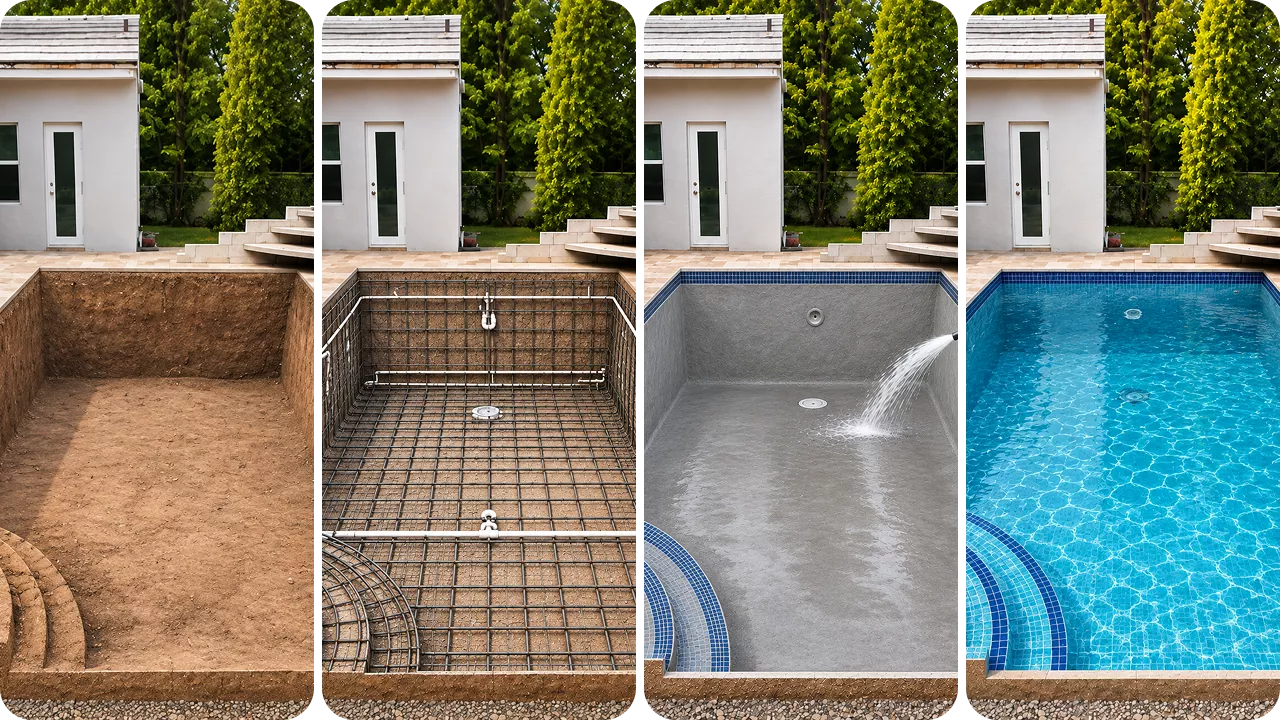
| Stage | What happens | Typical duration |
|---|---|---|
| Consultation and estimate | Discuss pool goals, property conditions, and project scope | Included in 1–2 month decision phase |
| Estimate review and 3D design | Review pricing and finalize the design before construction | Estimate review typically 1–3 weeks |
| Contract | Confirm the final scope and sign the agreement | Included in decision phase |
| Permits and HOA approval | Submit plans and obtain required approvals | Building permits usually about 1 month; HOA varies |
| Layout and excavation | Mark the pool shape and excavate | 3–7 days |
| Steel and plumbing | Install reinforcement, plumbing, and complete required inspections | 1–2 weeks |
| Gunite shell and curing | Spray the concrete shell and allow proper curing | 2–4 weeks |
| Tile, coping, and decking | Complete the pool edges, tile, and surrounding deck | 2–5 weeks |
| Equipment and electrical | Install pumps, filters, and electrical connections | 1–2 weeks |
| Interior finish and start-up | Complete the interior finish, fill the pool, start equipment, and conduct the walkthrough | 1–2 weeks |
How long does it take to build a gunite pool? Construction typically takes 8 to 16 weeks, depending on design complexity and site conditions. The gunite application itself usually takes about a day or two, while curing and required inspections add time before subsequent construction stages can proceed. Some activities may overlap, so individual stage durations do not always add up to the total construction timeline.
Payments: 20/40/30/10%. See pool financing options.
Pool Permits And HOA Approval in South Florida
How long does it take to get a pool permit? Sapphire Pools & Spas project data shows that building permit approval usually takes about one month, though that isn’t guaranteed. Pool permit requirements look similar across the region: plans, a site survey showing setbacks, county plan review, and inspections at each stage of the build.
Review times vary by county. Palm Beach County treats a new pool as a complex residential project, so plan review typically takes a few weeks. In St. Lucie County, pools in Port St. Lucie can go through building, zoning, and sometimes fire review. Review processes in neighboring counties can differ, so confirm requirements with your local building department.
Indian River County reviews applications across departments at the same time. Under the Indian River permit guidelines, the review clock starts only when the county deems an application complete, so a clean first submittal helps.
Homeowners in planned communities may also need approval from their homeowners association before construction begins. Swimming pool rules and regulations for HOA communities may address pool placement, fencing, screen enclosures, and equipment screening. This architectural review is separate from county permitting and may follow a different approval timeline. Preparing design documents, property surveys, and HOA requirements early can help homeowners avoid unnecessary revisions.
Sapphire handles permitting and HOA approval for homeowners. A pool builder in Palm Beach County who knows local pool permit requirements and swimming pool codes and regulations can keep the paperwork moving. Still, even with approvals in hand, several things can slow a build.
What Can Delay a Pool Build
Several factors can affect how long a pool construction project takes in South Florida:
- Design complexity and custom features. Adding a spa, sun shelf, water features, or custom tile can increase the number of construction steps and materials required.
- County permitting. Incomplete documentation, requested revisions, and local review workloads can affect when construction can begin.
- HOA approval. Planned communities may require architectural approval in addition to county permits, creating a separate review process.
- Site conditions. A high water table, sandy or limestone soil, and restricted equipment access can complicate excavation.
- Inspection scheduling. Certain construction stages must pass inspection before the next phase can proceed.
- Rainy and hurricane seasons. Heavy rain and tropical weather can interrupt excavation, gunite application, and finishing work. The National Weather Service marks South Florida’s wet season as mid-May to mid-October, and hurricane season overlaps it. Afternoon storms usually cost a few days, but a tropical system can stall excavation, gunite, or finishing work for much longer.
- Decking and screen enclosures. Additional work surrounding the pool may extend the overall project timeline.
Finalizing the design before construction and working with a builder that manages project capacity carefully can help minimize avoidable scheduling issues.
How to Plan Your Pool Timeline
A few early choices shape your schedule more than anything that happens on the dig.
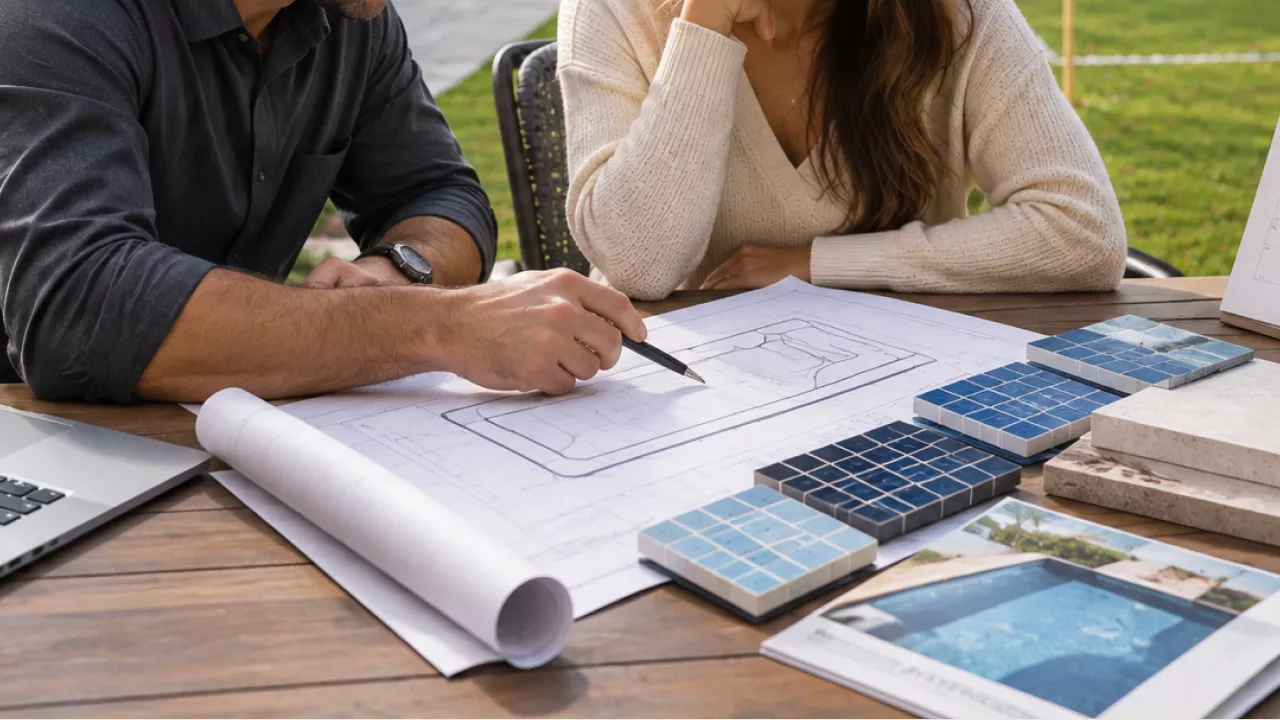
Decide design and features early. Settle the spa, sun shelf, water features, and tile before excavation, because mid-build changes are the most common source of delay. Comparing types of inground pools first makes those choices easier.
Gather your HOA documents and submit them alongside the permit. With your community guidelines, survey, and screen enclosure specs ready, both reviews can run in parallel.
Pick a start window that accounts for rainy season. Fall and winter starts usually keep excavation and gunite work in drier months. They’re preferred, not required, since Florida allows pool construction year-round.
Ask builders about schedule and concurrent projects. How many jobs are active right now, and who’s your point of contact? A builder who can start tomorrow may be short on work or overbooked. You’ll find more questions in the guide to choosing a pool builder.
Plan your budget alongside your construction schedule. Explore our guide to inground pool cost in South Florida or learn what a custom pool costs in South Florida before finalizing your project scope. Before signing a contract, confirm the project scope, design details, and payment milestones. Clear pricing and a finalized design can help reduce unexpected changes during construction.
When you’re ready, submitting an inquiry for a free quote is a low-pressure first step toward residential pools and spas built for real life.
What We See Building Gunite Pools across South Florida
Across Palm Beach, Martin, St. Lucie, and Indian River counties, the same patterns repeat. The dig rarely stretches a schedule. The waiting around it usually does.
Permit and HOA waits are where schedules slip first. A planned community in Port St. Lucie may need architectural approval on top of the county permit, and either review can bounce back over one missing detail. Wet-season weather comes next. A June start can lose days to afternoon storms during excavation and gunite, while a November start often moves more steadily.
Mid-build changes are the slips homeowners regret most. Add a sun shelf after the steel is set, and you’re looking at rework, a fresh inspection, and new material orders.
What keeps builds on track is mostly structure. Sapphire runs a small in-house team and doesn’t overbook it, so your pool isn’t competing with other jobs for the same crew. A settled 3D design moves decisions to the screen instead of the hole. With about 30 years of pool construction behind it, Sapphire has found that the honest answer to how long it takes to build a pool in Florida starts with these habits, not a promised date.
Plan the Weeks, Not just the Pool
So, how long does it take to build a pool in Florida? For a custom gunite pool, expect 1 to 2 months for design and decisions, about a month for permits, and then 8 to 16 weeks of construction. Complex features, HOA reviews, and rainy-season weather can stretch that window.
The steps that keep a build on schedule are simple. Settle your design early. Submit complete permit and HOA documents together. Choose a builder who doesn’t overbook a small crew.
A pool done right is made to last through summer after summer, so a few extra weeks of patience pay off. Browse finished projects in the Sapphire portfolio to see what that time produces.
Ready to map out your own timeline? Submitting an inquiry for a free quote is an easy first step toward a pool built for real life.
FAQ
How long does it take to build a concrete or gunite pool?
Construction typically runs 8 to 16 weeks from excavation to completion. Add about a month for permits, plus time for design and contract. Spraying the gunite shell takes about a day, but curing needs 7 to 14 days.
How long does it take to get a pool permit in Florida?
It usually takes about a month, based on Sapphire Pools & Spas project data. Timing varies by county and seasonal workload. Review typically starts only once your application is complete.
Do HOAs need to approve a pool before construction?
In most planned communities, yes. Submit your design and expect a review window before work starts. HOA rules often cover setbacks, fencing and screen enclosures, and a county permit doesn’t replace that approval.
Can you speed up the pool construction process?
You can, to a point. Settle your design and features early, submit complete permit and HOA documents, and choose a builder with a small team that doesn’t overbook. Even then, no timeline is guaranteed.
Does an inground pool add value to a home in Florida?
It can add appeal in a warm climate, but value varies by home and local market. Quality design and steady upkeep matter most. A local real estate professional can tell you how pools sell in your neighborhood.
Related Articles
 11 min read
 10 min read
