

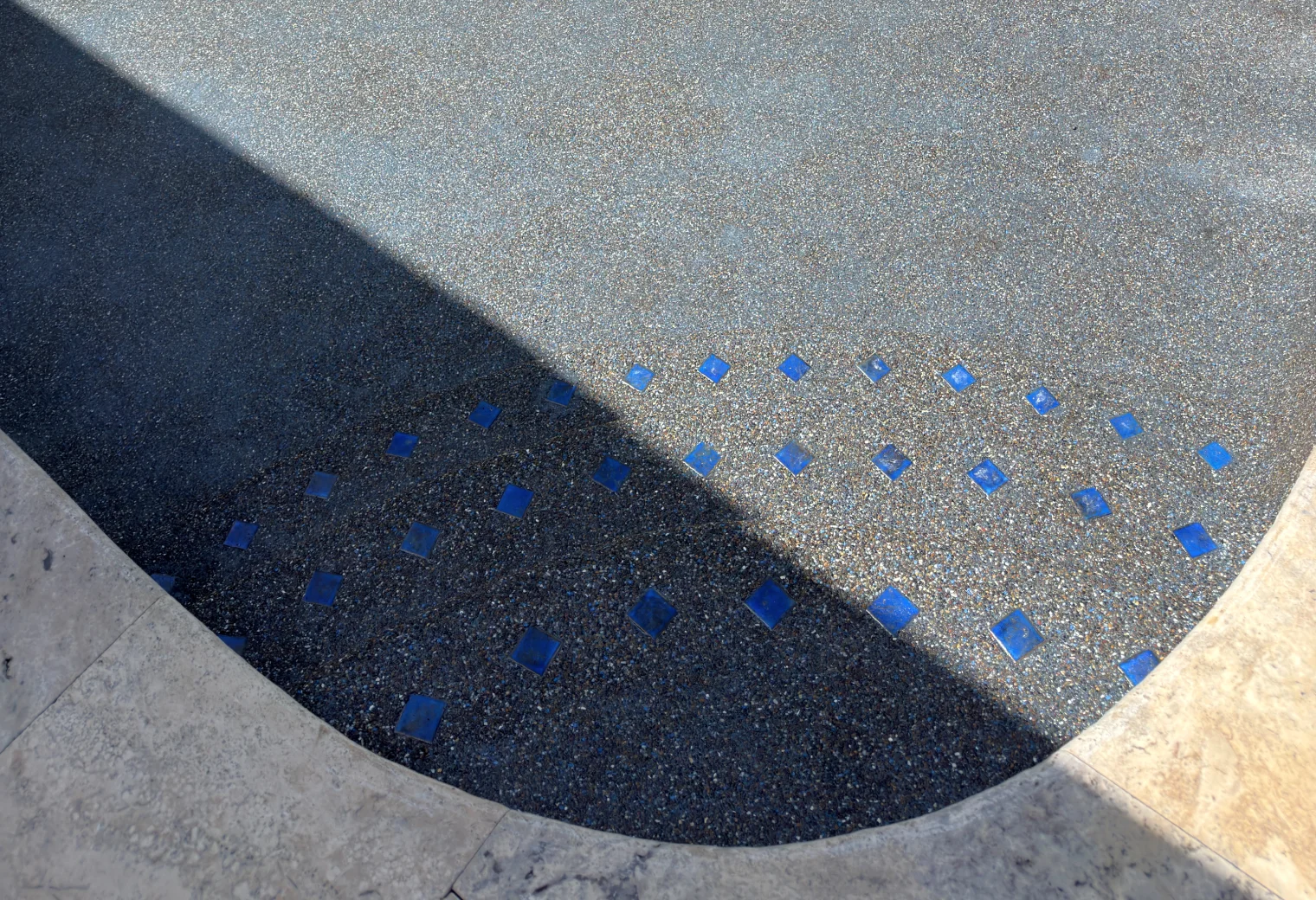
The pool resurfacing cost for an average gunite pool in Palm Beach, Martin, St. Lucie, or Indian River County typically runs from several thousand dollars to the mid-teens in thousands, depending on the finish, size, and shell condition. Where your pool lands in that range depends on the finish you pick, the shell size, and what shows up once the old plaster comes off.
South Florida adds its own wrinkles. A high water table means a drained gunite pool can’t sit empty for long, and year-round UV and salt chlorination wear finishes faster than in cooler climates. This guide breaks down swimming pool resurfacing costs by finish, size, and condition, plus the extras that affect your final quote.
Pool Resurfacing Cost in South Florida: Quick Answer
For an average residential gunite pool in Palm Beach, Martin, St. Lucie, or Indian River County, the pool resurfacing cost typically lands around $8,000 to $15,000 total. Broken down, the pool resurfacing cost per square foot runs roughly $6 to $15. Treat both as working estimates, not quotes.
Your finish choice, pool size, and the condition of the old shell drive most of the difference. As a national baseline, Homewyse’s average resurfacing estimate puts basic work at $6.55 to $7.81 per square foot as of May 2026.
So how much does pool resurfacing cost when you include everything? A typical quote should cover the full job:
- Draining the pool
- Removing the old finish by chipping or blasting
- Shell prep, including crack repair and a bond coat
- Applying the new finish
- Refilling and chemical startup
Rushed prep is one reason some new finishes flake early.
Only a site inspection can set the real gunite pool resurfacing cost for your pool. Submitting an inquiry for a free quote gets that visit on the calendar and gives you a written, line-by-line breakdown.
The biggest single swing in that range is the finish you choose, so let’s compare the options.
Cost by Finish Type: Plaster, Quartz, Pebble, Glass Bead
Your finish choice moves the pool resurfacing cost more than anything else. The same shell can cost thousands more or less, depending on what goes on the walls.
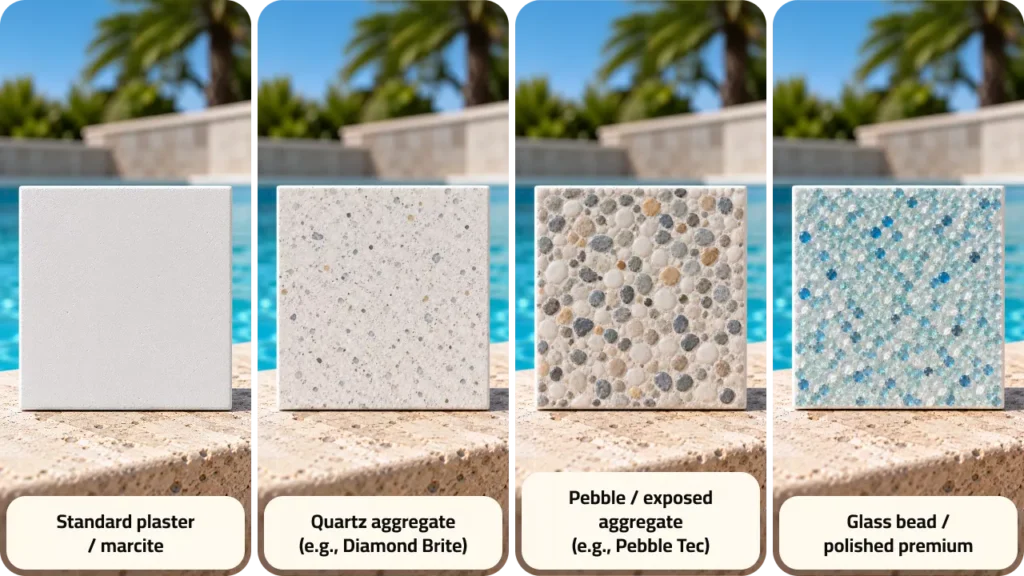
The figures below follow a 2026 national resurfacing cost guide. Treat them as starting points.
| Standard plaster / marcite | Quartz aggregate (e.g., Diamond Brite) | Pebble / exposed aggregate (e.g., Pebble Tec) | Glass bead / polished premium | |
| Price per sq ft | $4–$8 | $6–$10 | $8–$12 | $10–$15 |
| Typical lifespan | Shortest of four | Mid-range | Longer | Long end |
| Feel underfoot | Smooth | Smooth, light texture | Textured | Smooth, polished |
Pool replastering cost is generally the lowest with standard marcite, while Diamond Brite pool resurfacing cost falls in the middle. Pebble Tec pool resurfacing costs more upfront, though pebble typically outlasts plaster under the South Florida sun. Water balance affects every finish, so none of these lifespans are guaranteed.
Sapphire Pools & Spas installs Pebble Technology, Florida Stucco, and StoneScapes finishes as part of its pool resurfacing services. An inspection confirms the cost to replaster your shell.
Once you know a finish’s price per square foot, a simple formula gets you a ballpark for your own pool.
Pool Resurfacing Cost Calculator by Pool Size
Forget gallons for a moment. Contractors price interior surface area, so that’s the number to chase.
surface area = (L × W) + (L × avg depth × 2) + (W × shallow) + (W × deep)
cost = surface area × price per sq ft
Avg depth = (shallow + deep) ÷ 2. Assumes a typical shallow-to-deep depth range and a typical market price per square foot.
| 12×24 | 15×30 | 20×40 | |
| Approx. surface area | ~700 sq ft | ~970 sq ft | ~1,490 sq ft |
| Finish-only estimate | ~$4,200–$10,500 | ~$5,800–$14,500 | ~$8,900–$22,400 |
How much does it cost to replaster a 20×40 pool? Check the third column.
If you only know gallons, you can roughly back into dimensions, but surface area is what contractors price.
Freeform shapes shrink the area, while steps, benches, and deeper ends add to it. That’s why concrete pool resurfacing cost gets confirmed on site.
Worked Example: a 15×30 pool
Picture a 15×30 pool, 3.5 ft shallow to 8 ft deep.
floor = 15 × 30 = 450 sq ft
avg depth = (3.5 + 8) ÷ 2 = 5.75 ft
walls = perimeter 90 × 5.75 ≈ 518 sq ft
That’s roughly 970 sq ft of interior. At $4–$8 per sq ft, plaster comes to about $3,900–$7,800. Pebble at $8–$12 lands near $7,800–$11,600.
This is an illustration, not a quote. Rounded corners, steps, and repairs shift the real cost of resurfacing a pool. The finish price is only part of the bill, so let’s look at the extras many quotes add.
Extra Costs to Budget for
The finish is only part of the cost of resurfacing a swimming pool.
| Waterline tile band | Coping repair or replacement | Crack, delamination and plumbing repairs | Permits | Main drain/equipment checks | Water, refill, and chip-out | |
| When it applies | Cracked or dated tile | Loose or worn edges | Found during prep | Varies by county | Older drains, tired pumps | Nearly every job |
| Relative add | Moderate | Moderate to high | Low to high | Low | Low to moderate | Low to moderate |
Do tile and coping during one drain. It’s worth comparing pool coping options first. Repairs are the wild cards. Cracks often hide until chip-out, and fixing them brings in pool repair services.
Permits vary by county, and one pool renovation can make your resurfacing cost more predictable. Drains get checked, and water care is extra. Then there’s South Florida’s high water table.
Draining & the High Water Table
In much of South Florida, groundwater sits close to the surface under your yard. Empty a gunite pool, and that water pushes up on the shell with a force called hydrostatic pressure. The hydrostatic plug in the main drain relieves it by letting groundwater in before the shell can lift or crack.
That’s why the pool shouldn’t sit empty longer than necessary. Prep, finish, and refill typically follow a tight sequence, sometimes timed around rain. Extra pumping, standby time, or weather pauses can nudge both cost and schedule. Draining is one of several local factors that move the final price.
What Drives the Price in South Florida
Two pools on the same Jupiter Street can draw very different quotes. Most of what moves the pool resurfacing cost Florida homeowners pay shows up during an inspection.
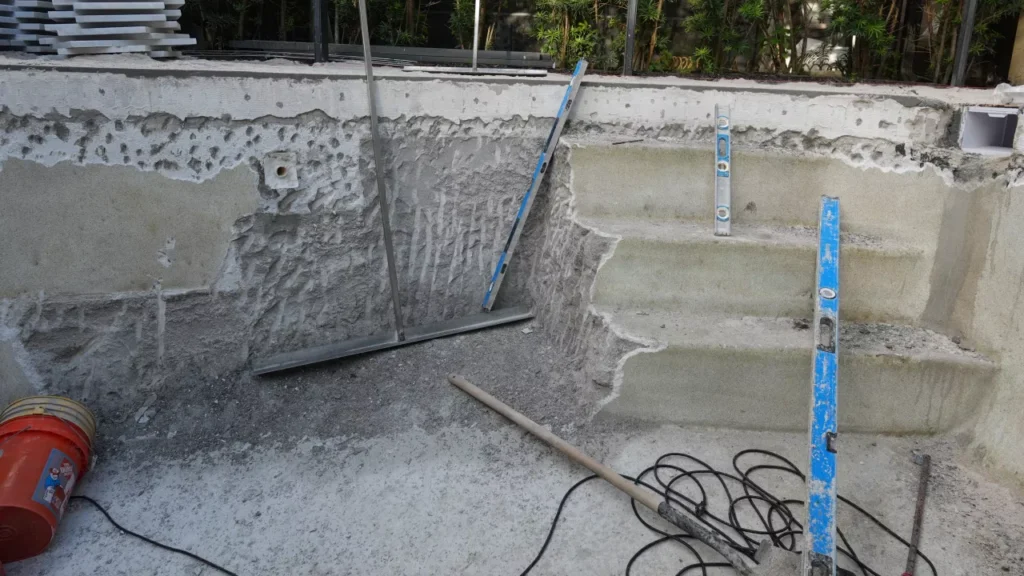
Finish choice, size, and shape set the baseline, since freeform curves, steps, and benches take more hand-troweling.
Shell condition and existing finish prep come next. Delaminated plaster or hidden cracks mean more chip-out before the new finish goes on.
Hurricane season brings afternoon storms that can interrupt curing, while the spring rush lengthens contractor queues. HOA rules and approvals add vendor registration and lead time.
Intense UV and salt chlorination wear finishes faster, so choose your finish wisely.
To keep the average cost of resurfacing a pool in check, compare quotes line by line, bundle tile or coping into the same drain, and aim for quieter off-peak months. Gelcoat shells and vinyl liners price differently and sit outside this guide. Submitting an inquiry for a free quote gets you a written, itemized breakdown.
Price also depends on how long a finish lasts before you pay again.
How Often to Resurface a Pool
Most South Florida gunite pools need resurfacing roughly every 10 to 15 years, though the finish sets the clock. Standard plaster or marcite typically lasts about 7 to 12 years. Quartz aggregate usually runs 10 to 15 years, and pebble often reaches 15 to 20 years or more with steady care.
None of these ranges is a promise. Florida sun hits your pool year-round, and intense UV breaks down the surface over time. Salt systems raise dissolved solids and can throw water balance off track, so salt pools need more frequent testing. Water that stays aggressive for weeks etches cement finishes and shortens their life.
That’s why a lower-priced finish can cost more in the long run. A lower pool replastering cost today may mean resurfacing again years sooner.
The hands-on work usually takes about 1 to 2 weeks: draining, chip-out, prep, finish, and refill. Curing and startup add more time beyond that. Weather, repairs found after chip-out, and the high water table can stretch any schedule.
Rough spots, stains, or hollow areas? Check these signs your pool needs renovation.
If your pool is due, the next question is whether resurfacing alone is enough.
Resurfacing vs Full Remodel: Which Do You Need?
If the shell is sound and only the finish looks tired, resurfacing alone usually does the job.
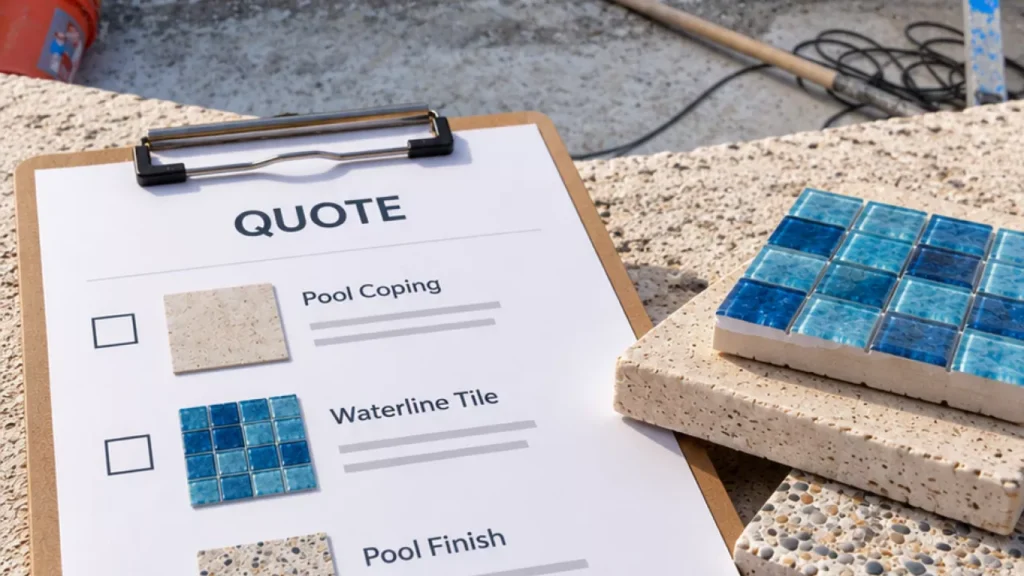
Bundling resurfacing with tile and coping saves on mobilization: one crew setup, one drain, and one cure period instead of two. Coping goes in before the finish, so the fresh surface stays protected.
Costs fall into three tiers. Resurface-only sits at the lowest cost tier, as covered above. A partial remodel adds tile, coping, or deck work and climbs well past that, while a full remodel with structural changes runs higher still. You can spread the larger tiers out through pool project financing.
Run through this decision checklist:
- Is the structure sound, with no major cracks?
- Are coping and waterline tile dated or loose?
- Are the pump, filter, or heater due for upgrades?
If the answer is yes on the first question and no on the rest, resurfacing alone likely covers it. Several yeses after that first question point toward a remodel.
For perspective, even a full remodel usually lands below new inground pool costs. An inspection confirms which path fits your pool resurfacing cost budget.
Here is what typically shows up on real resurfacing jobs across the Treasure Coast and Palm Beach area.
What We See on South Florida Pool Resurfacing Quotes
Across 50+ completed pool projects from Vero Beach to Boca Raton, Sapphire Pools & Spas sees the same patterns repeat on local quotes. Knowing them ahead of time keeps surprises small.
Where final prices differ from first estimates
Most gaps trace back to what nobody can see with water in the pool. A photo-based estimate assumes a sound shell and one layer of old finish. Once the pool is drained, stacked layers of marcite or loose tile can push the number up. A quote that separates the finish price from repair allowances shows you exactly where any change came from.
Hidden repairs found after chip-out
Chip-out tells the truth. Common finds include hollow, delaminated patches, hairline cracks that run deeper than they looked, and pop-offs around steps, lights, and return fittings. Older shells in Palm Beach County and along the Treasure Coast sometimes need structural crack repair before the bond coat goes on.
How bundling affected totals
Homeowners who added waterline tile or coping during the same drain spent more overall but less per item. One mobilization, one drain, and one cure period kept the combined total below two separate projects. That math only works when the tile or coping actually needs replacing.
Planning Your Pool Resurfacing Budget
For most South Florida gunite pools, a realistic pool resurfacing cost depends on finish, size, and shell condition; get an on-site quote. Those three factors do most of the steering. Plaster keeps the upfront number lower. Pebble and glass bead cost more upfront but often go longer between drains.
Smart budgets leave room for repairs found after chip-out. They also bundle tile or coping into the same drain when those pieces are worn, so you don’t pay for a second setup later.
To see how different finishes look in real South Florida yards, browse the Sapphire Pools portfolio of completed projects from Vero Beach to Boca Raton.
For real numbers for your own pool, submit an inquiry for a free quote to schedule an on-site inspection. You’ll get a written, line-by-line breakdown so the plan fits your pool and your budget.
FAQ
Is it worth resurfacing a pool?
Usually, yes. If the finish is rough, stained or losing water, resurfacing protects the gunite shell underneath and costs far less than rebuilding. An inspection first confirms the shell is sound enough for a new finish.
How much does it cost to resurface a 20,000 gallon pool?
A 20,000 gallon pool has a mid-sized interior surface area; multiply that area by your finish’s per-square-foot price for an estimate before tile, coping or repairs.
What is the cheapest way to resurface a pool?
Standard plaster or marcite is typically the lowest-cost finish. To save more, bundle tile or coping into the same drain and schedule during quieter months. Don’t skip prep or shell repairs, because those shortcuts usually cost more later.
How long does pool resurfacing take?
The work often takes one to two weeks, covering draining, chip-out, prep, finish and refill. Repairs found after chip-out and South Florida weather can stretch that, so treat any schedule as an estimate.
When is the best time to resurface a pool in South Florida?
Off-peak months outside hurricane season and the spring rush can make scheduling easier. In practice, rain forecasts and your contractor’s calendar decide the real window, so it helps to ask early.
Related Articles
 1 min read
