

A lagoon style pool is a freeform in-ground pool with sweeping curves, shallow coves, and a gradual beach entry, rather than straight walls and square corners. In South Florida, that natural layout pairs well with custom construction, sand-toned finishes, stone or travertine decking, and tropical landscaping.
Expect a wide range in cost, real trade-offs compared with a rectangular pool, and a long list of feature decisions: rock grottos or sheer descents, spillover spas, bubblers on the tanning shelf, color-changing LED lighting.
Here’s what actually defines the shape, and where the money goes.
What Is a Lagoon Style Pool?
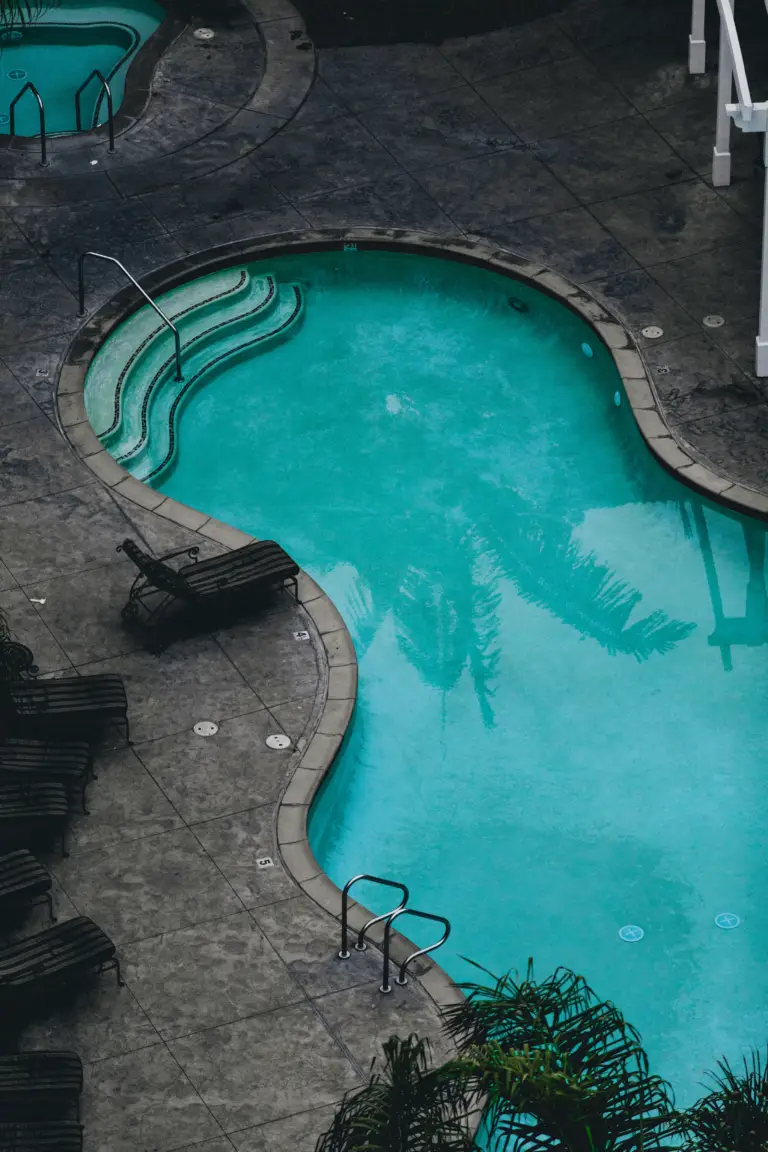
A lagoon-style design is a freeform in-ground pool built with curves rather than straight runs and square corners. There are no hard angles – just flowing edges, outcoves, and shallow pockets that read more like a natural swimming hole than a lap pool. Industry designers describe a lagoon shaped pool as one that mimics the curving outline of a pond or lagoon, which is exactly why rectangular and Roman-end shapes don’t translate well to the style.
The second signature element is the entry. A beach entry, also called zero entry, slopes gradually from the deck into the water the way a shoreline does – perfect for toddlers in Wellington, an afternoon in Coral Springs heat, or a lounge chair parked in six inches of water. Gunite is well-suited to a custom lagoon style swimming pool because the shell can follow complex curves, varied depths, beach entries, and other freeform details.
Sprayed concrete lets the shell follow any curve and depth you draw, which matters for custom lagoon-style pool builds squeezed into irregular South Florida lots.
Pair the shape with sand-toned interior finishes, stone decking, and palms, and the whole backyard reads tropical.
Popular Lagoon Pool Design Shapes
Most lagoon style pool designs start with wide freeform curves and outcoves – those soft bays cut into the perimeter that give you a shallow lounge pocket on one side and open swimming water on the other.
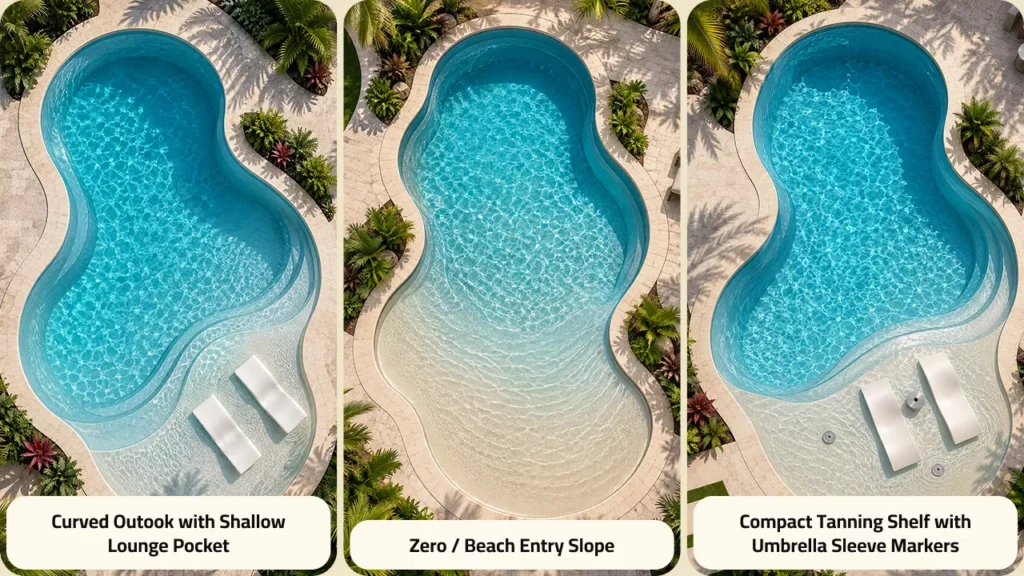
Beach or zero entry is the next big decision. The slope walks you in like a shoreline, and that wide shallow area doubles as in-water seating – plenty of homeowners set loungers, umbrellas, or a small table right in the water to stretch the patio out.
A tanning shelf, sometimes called a baja shelf, does something similar in a tighter footprint. Sitting in roughly 6 to 12 inches of water, tanning shelf designs take bubblers, umbrella sleeves, and accent tile beautifully.
Multi-level lagoon layouts add another dimension: a raised spa spilling into the main body, stepped deck elevations, or a grotto tucked behind a waterfall. Working with a narrow Indian River lot? A small lagoon style pool with tight curves, stone edging, and palms still delivers the look – view lagoon-style pool projects for compact-yard lagoon style pool ideas.
Shape and scale drive much of the budget conversation, so it helps to see how these design choices translate into real construction costs.
Lagoon Style Pool Cost in South Florida
Plan on $65,000 to $250,000 or more for a custom lagoon-inspired pool built between Port St. Lucie and Indian River County. A modest freeform shell with a beach entry and simple decking sits near the bottom of that range; a resort-style build with rockwork, a spillover spa, and extensive travertine decking lands in the $180,000 to $250,000-plus territory. National cost guides put lagoon-specific projects at roughly $50,000 to $150,000, but those averages don’t account for South Florida labor, permitting, and premium finishes.
Here’s the part that surprises people: shape alone isn’t the villain. Gunite pricing in Florida generally runs $100 to $280 per square foot, and that cost is based on surface area and perimeter, not corners.
base shell cost = surface area × cost per square foot
What actually raises lagoon style pool cost compared with a simpler rectangular design is the combination of shell complexity, curved deck cuts, water features, premium finishes, spa integration, and additional site work.
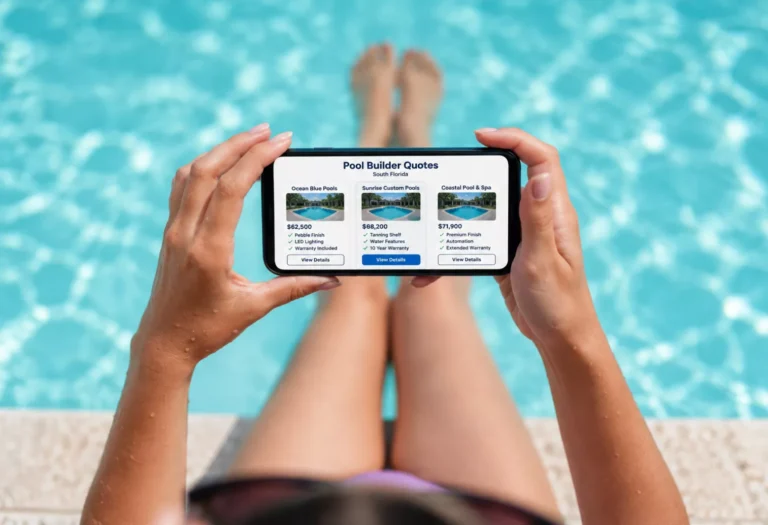
Want real numbers for your yard? Submitting an inquiry for a free quote gives you a scoped estimate rather than a guess.
Lagoon Pool Features: Waterfalls, Spas & More
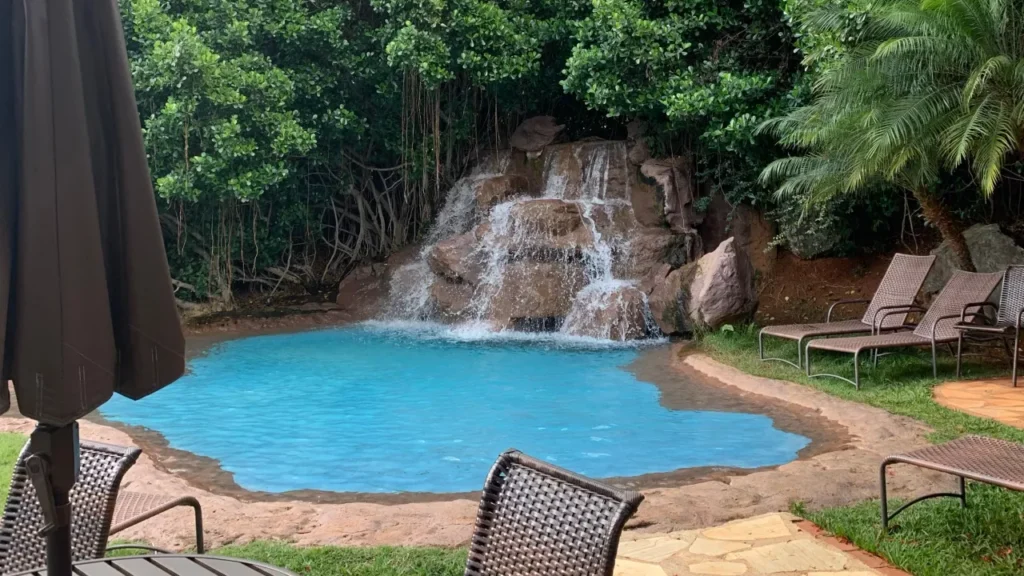
A lagoon style pool with waterfall features is where the shape stops being a shape and starts to feel like a resort. Sheer descent waterfalls send a thin, wide curtain off a raised wall for a clean modern look, while rock and grotto waterfalls stack boulders into a tumbling cascade you can swim behind – the classic move for a natural lagoon style pool in Jupiter or Parkland.
Spillover and perimeter-overflow spas add a second layer of sound and motion, sheeting warm water back into the main body. Scuppers set into a raised feature wall do the same thing at a smaller scale, and bubblers on the tanning shelf keep kids busy for hours.
The finish choice determines how the water reads and how long the surface holds up. Pebble and aggregate finishes tend to be the most durable of the common options; quartz sits in the middle, and glass bead is the premium alternative. Worth comparing pool interior finishes before you commit.
Fire-and-water bowls and color-changing LED lighting complete the picture, and 3D rendering lets you see it all before excavation – explore lagoon pool waterfalls and spa features to narrow your list.
With costs and features on the table, it’s worth weighing the honest trade-offs of choosing a lagoon design over a traditional pool shape.
Lagoon Pool Pros & Cons for South Florida Homes
A backyard lagoon style pool can give a South Florida property a distinctive resort feel, especially when the waterline is integrated with planting, stonework, and curved decking. For homeowners who prefer a more natural landscape, a lagoon style backyard pool also gives the design more freedom to work around existing outdoor spaces.
ROI varies, and few owners recoup the installation cost dollar-for-dollar at resale. You’re buying lifestyle first, equity second. Freeform shells and rockwork also take more labor and more days on the schedule than a straightforward rectangle.
| Factor | Lagoon new build | Rectangular new build | Lagoon-style remodel |
| Upfront cost | Typically higher | Typically lower | Depends on existing shell |
| Build complexity | Higher | Lower | Varies by structural changes |
| Design flexibility | High | Moderate | Limited by existing structure |
| Overall look | Natural, resort-inspired | Clean and traditional | Can significantly transform an existing pool |
An existing pool can also be remodeled into a lagoon-inspired design with updated coping, finishes, shallow lounging areas, and other structural changes where the existing shell allows.
What We’ve Learned From Freeform Pool Projects
Site conditions can change how a freeform pool is engineered and built. Groundwater, soil conditions, drainage, lot access, and existing elevations can all influence excavation, shell elevation, decking, and the detailing of a beach entry or raised feature.
Shelf depth is where many designs fall short. A tanning shelf that’s too deep can make chairs float, while one that’s too shallow bakes in the summer sun – depth needs to be dialed in for comfort and stability. Beach entries generally work best with a gentle, gradual slope that transitions comfortably into swimming depth.
Deck drainage matters more here than almost anywhere. Curved coping lines create low spots, so strip drains and a slight pitch away from the shell keep rainy-season runoff from carrying sand and mulch into the water.
Travertine coping stays cooler underfoot than dense porcelain in direct sun, at least by most homeowners’ accounts. Pebble interiors also tend to hold color better than standard plaster salt systems and withstand heavy traffic better than standard plaster – a pattern reflected throughout Sapphire’s South Florida pool building experience with lagoon pool projects.
Bringing a Lagoon Style Pool from Sketch to Swim
Curves, a beach entry, and a shell that follows the land instead of fighting it – that’s the whole idea. Everything else is a decision you get to make: pebble or quartz interior, travertine or porcelain coping, a rock grotto versus a clean sheer descent off a raised wall.
Budget honestly, plan for the drainage and shelf depths that South Florida sun and rainy seasons demand, and the pool should hold up summer after summer.
Not sure what your lot can hold? Browsing completed lagoon pool projects is the fastest way to see how a Wellington yard and a tight Coral Springs lot each handled freeform shapes.
When you’re ready to explore a design for your own property, Sapphire can review the site, discuss features and finishes, and use 3D rendering where appropriate to help visualize the pool before construction.
FAQ
Are lagoon pools worth it?
Worth it if you want a natural, resort-style backyard with strong curb appeal. Sun Belt pool resale premiums in the 10–15% range help offset the higher upfront spend. If your priority is lowest cost per square foot, a rectangle wins.
Are lagoons cheaper than traditional pools?
Generally no. Freeform shaping, curved decking, and water features push South Florida lagoon builds to roughly $65,000 to $250,000-plus, above typical rectangular averages. A simpler lagoon with fewer features narrows that gap considerably.
How small can a lagoon pool be?
Small freeform pools can work well on compact lots in Indian River and Palm Beach. Tight freeform curves and a mini beach entry still deliver the look. Shrinking the tanning shelf or swim zone keeps the character without the full price.
Can I add a spa to a lagoon pool?
Yes. Spillover and perimeter-overflow spas integrate naturally into curved layouts, typically running $6,000 to $17,000 installed. Position the spa to feed a waterfall or scupper, and you get a layered water feature.
Related Articles
 10 min read
 2 min read
