

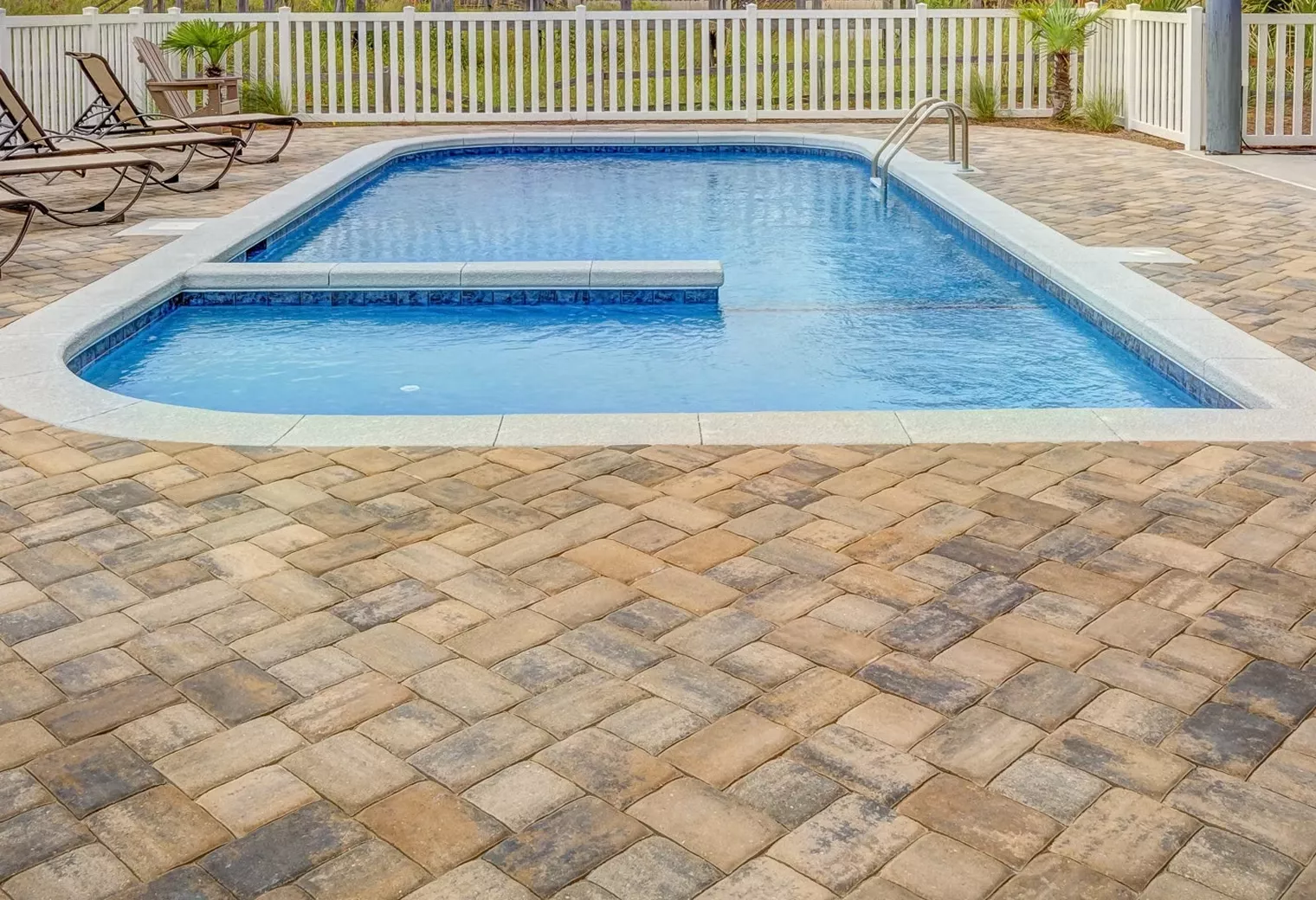
South Florida homeowners comparing inground pool types are really choosing between three materials: concrete (gunite), factory-molded shells, and vinyl liner. Each shapes what your pool can look like and how it’s installed. A gunite pool is sprayed over a steel rebar cage on your lot, while a molded shell is trucked in and set by crane. A vinyl pool uses a custom-cut liner stretched over site-built wall panels.
Those differences matter more here than almost anywhere else. Sandy soil, a high water table, and tight lots from Port St. Lucie to Indian River County can rule an option in or out before you ever pick a tile. Sapphire Pools & Spas builds concrete pools only, but this guide gives every material a fair look. First, here’s a quick side-by-side comparison of the three.
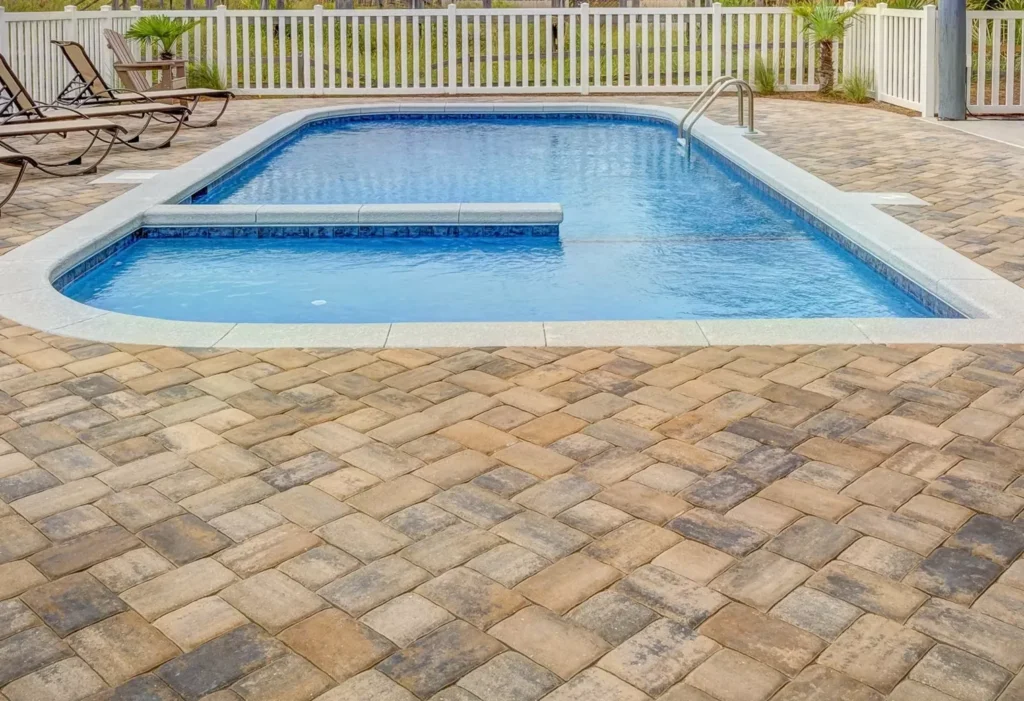
Types of Inground Pools at a Glance
Most of us start by picturing a shape, but the material decides which shapes are possible. For types of pools inground, construction material is the best place to start.
The three main types of inground pools are concrete/gunite, fiberglass, and vinyl liner. Sapphire Pools & Spas specializes exclusively in concrete pools, offering greater design flexibility and customization. Gunite is concrete sprayed over a steel rebar cage, so it’s formed right on your lot. A fiberglass pool arrives as a factory-molded shell, limiting shape and size options. A vinyl liner pool pairs site-built wall panels with a replaceable liner.
| Attribute | Concrete/gunite | Molded fiberglass | Vinyl liner |
|---|---|---|---|
| How it’s built | Sprayed on site | Factory shell, craned in | Panels plus liner |
| Shape options | Nearly any design | Manufacturer molds only | Mostly rectangular layouts |
| Interior surface | Plaster, quartz, pebble | Smooth gelcoat | Custom-cut vinyl |
Semi-inground pools sit partly buried, with some wall above grade. They fall outside these three categories and often suit sloped yards. The PHTA-5 residential standard covers permanent residential pools deeper than 24 inches and addresses design and installation.
Sapphire Pools & Spas builds concrete pools only. Still, each inground pool type has real strengths, and your soil, water table, and design goals will quickly narrow the field. For budget planning, see the guide to South Florida inground pool cost.
Let’s begin with the material that gives you the most design freedom: concrete and gunite.
Concrete & Gunite Inground Pools
A concrete inground pool gets built on your lot, not in a factory. Crews tie a steel rebar cage in the exact shape you want, then spray concrete over it. That’s why it fits a narrow Jupiter side yard or an odd-shaped Fort Lauderdale lot better than other pool materials.
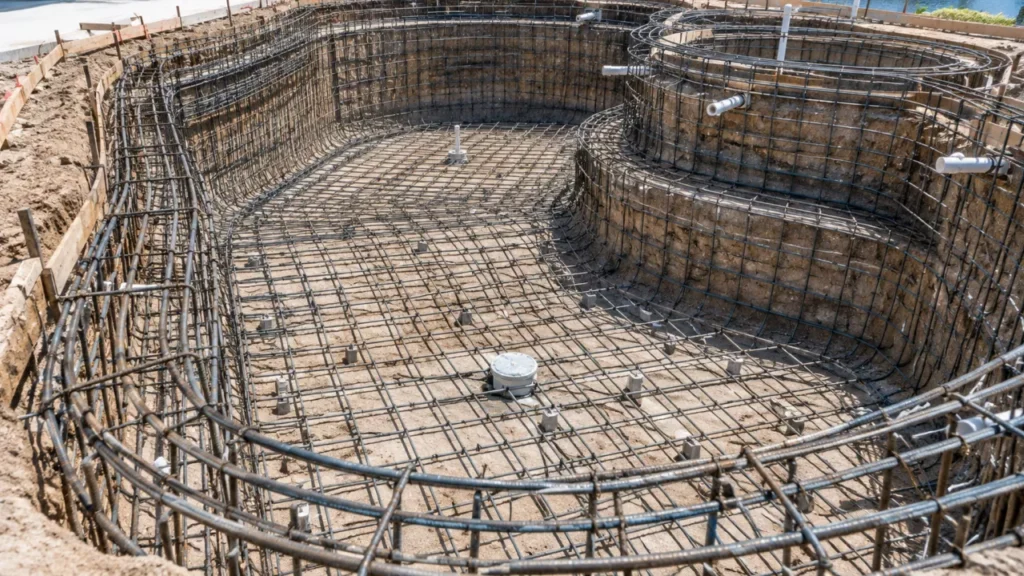
Gunite and shotcrete are the two application methods. Gunite is a dry mix hydrated at the nozzle, so crews can pause and adjust as they go. Shotcrete arrives premixed and usually goes on in a single session to avoid cold joints.
Then come the interior finishes. White plaster is the traditional choice, though it’s the most sensitive to neglect. Quartz resists stains and holds its color better. Pebble wears the hardest and costs the most.
The Florida Building Code requires an approved hydrostatic relief device wherever a water table is anticipated, and gunite pools are not exempt. Larger pools often get several valves, spaced by floor area under a common contractor rule of thumb. Valves add reinforcement, drainage, and excavation stability, but they never replace them.
Sapphire plans each concrete inground pool around these conditions in its custom concrete pools and spas. Fiberglass takes a very different, factory-built route.
Fiberglass Inground Pools
Sapphire Pools & Spas doesn’t install fiberglass pools because other inground pool options offer greater flexibility in design, size, and customization. Fiberglass pools are built in a factory, not on your lot. The manufacturer molds a one-piece shell with a smooth gelcoat surface and trucks it to your home. Once the excavation is ready, a crane lifts the shell into place.
That delivery method imposes firm size limits. Shells ship as oversized highway loads, so most manufacturers cap pool width at what the roads allow. Unlike custom-built concrete pools, fiberglass models come in predetermined shapes and sizes, limiting your options for a wide family pool or a unique backyard layout.
Site access matters just as much. The truck needs a clear route, and the crane needs room to set up. Overhead power lines, mature oaks, or a tight zero-lot-line home in Wellington can complicate the lift or rule it out entirely. On-site concrete pools offer more flexibility for properties with restricted access.
Lifespan varies, too. Manufacturers usually warrant the shell and gelcoat separately, and warranty terms differ by brand. Installation quality, water chemistry, and Florida’s strong sun all play a part.
Among inground pool types, fiberglass can still suit simple layouts on open lots. However, concrete pools offer more design freedom, while vinyl liner pools provide another option with a replaceable liner.
Vinyl Liner Inground Pools
Vinyl inground pools pair a site-built frame with a soft, flexible interior. Crews set galvanized steel or polymer wall panels around the excavation, which define the pool’s shape. Then they stretch a custom-cut liner, made to the exact dimensions of the walls and floor, into place.
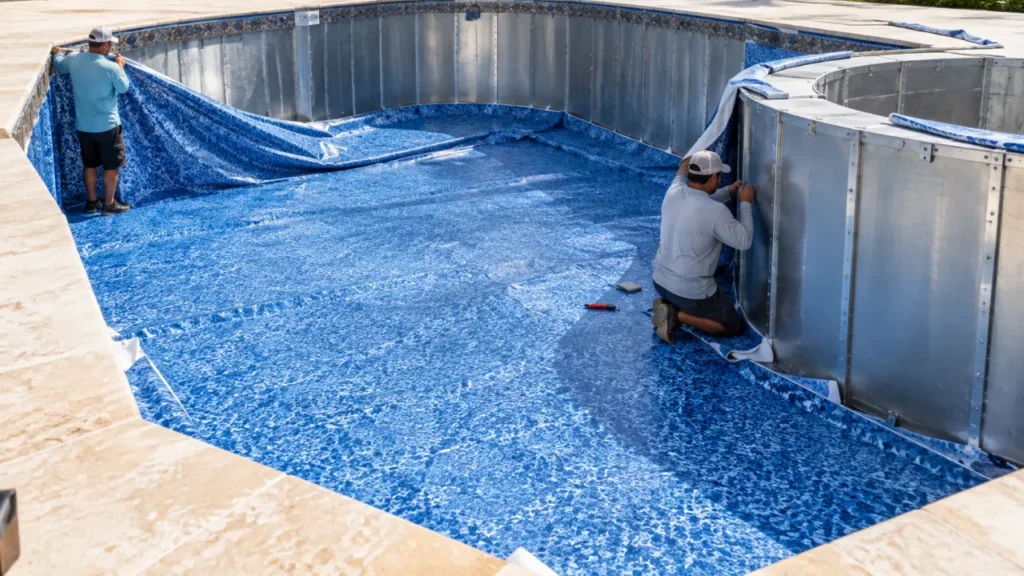
The panel structure can last for decades. The liner usually won’t. Vinyl liner pools often cost less upfront, but replacement liners add to the total over time. It’s a wear item, and poor water chemistry (especially low pH), strong sun, and heavy use can all shorten its life. In a Port St. Lucie yard where the pool is used year-round, treat liner replacement as a planned part of ownership, since a vinyl liner pool’s long-term cost includes at least one new liner.
Design options are narrower. Most vinyl pools are rectangular, and custom shapes add cost. Concrete makes vanishing edges, built-in spas, and textured detailing far easier to build in. Liner seams can also show.
Vinyl can accommodate steps and benches. The cleaner method places them under the liner so it molds to their shape, rather than using inserted units that end up a few shades off.
Sapphire Pools & Spas doesn’t install vinyl, but it can work well for a straightforward rectangular layout. Material is only half the story, though. The pool’s shape determines how it fits your yard and lifestyle.
Inground Pool Shapes & Designs
Material sets the limits, but shape decides how a pool lives day to day. Among inground pool designs, a few shapes keep coming up.
Rectangular pools are the most popular. Straight lines maximize swim space, suit lap swimming, and pair easily with a modern Boca Raton home. Freeform pools curve around existing palms, patios, or landscape features for a softer, more natural look.
Roman and Grecian pools lean formal. A Roman pool is rectangular with arched ends, while a Grecian pool cuts the corners to create an octagon-like outline.
Kidney pools offer an asymmetrical curve that fits compact yards and still leaves plenty of room to swim. Plunge and courtyard pools trade length for intimacy. They’re meant for cooling off and lounging, not laps.
Lap, L-shaped, and geometric layouts round out the list. A narrow lap pool fits a Stuart side yard, and an L-shape separates a swim lane from a shallow play area. Geometric designs tie in with clean architecture. Browse modern pool designs for examples of these inground pool types. If space is tight, a few shapes work especially well.
Best Shapes for Small South Florida Yards
A plunge pool is the go-to for tight lots. It’s compact, deep enough to cool off in, and fits a Delray Beach townhouse yard that couldn’t hold a full lap pool.
Geometric and L-shaped pools use space efficiently. Straight edges sit flush against patios and walls, and an L-shape tucks neatly around a corner. A courtyard pool suits homes with an enclosed patio.
Whatever the shape, setbacks, easements, and drainage decide your final footprint. An early site survey saves redesigns later. Once the shape is set, specialty styles and features add the finishing character.
Specialty Pool Styles & Features
Specialty features are where concrete pulls ahead. We engineer each one on site, so an edge, slope, or shelf fits your lot rather than a mold.
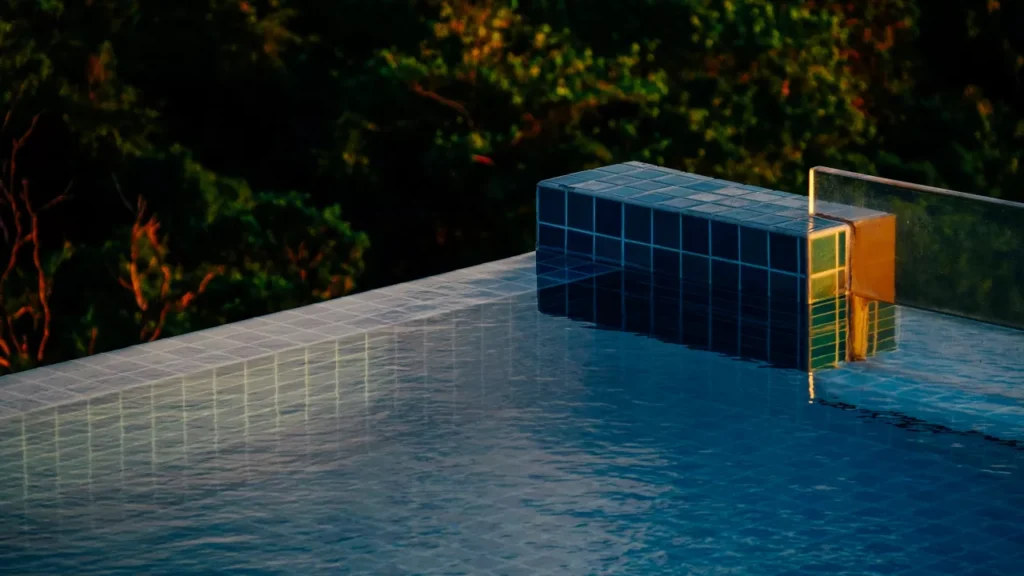
An infinity edge lowers one or more walls so water spills into a hidden catch basin, then gets filtered and recirculated. It needs a drop in grade or a view, which is why it suits a raised Jupiter waterfront lot better than a flat one.
Perimeter overflow and knife-edge pools spill on all four sides into a concealed trough. They work on flat sites but demand precise leveling and hydraulic balancing.
A beach entry slopes gently from deck to depth. Vinyl is out here, since a liner can’t be reliably tensioned over that slope.
A tanning ledge fits all types of inground swimming pools, with limits. Molded shells come with fixed ledges, while concrete lets you set the depth and add bubblers or umbrella sleeves. Browse tanning ledges and waterfalls for ideas.
Integrated spas, waterline tile, waterfalls, LED lighting, and even a lazy river can round out the design. For a natural look, see the lagoon-style pool design guide. With the options laid out, a side-by-side chart makes it easier to compare the three materials.
Pool Type Comparison Chart
What are the different types of inground pools? Prices conflict, so compare behavior.
| Attribute | Concrete/gunite | Molded fiberglass | Vinyl liner |
|---|---|---|---|
| Customization | Nearly any shape or feature | Limited to manufacturer molds | Mostly rectangular, some custom |
| Size range | Sized to your lot | Width capped by transport | Flexible within panel layout |
| Interior surface | Plaster, quartz, or pebble | Smooth factory gelcoat | Custom-cut vinyl liner |
| Surface renewal | Periodic resurfacing | Gelcoat refinish, varies | Liner replacement over time |
| Cost timing | Higher upfront investment | Moderate upfront, lighter upkeep | Lower entry, recurring liners |
| South Florida fit | Engineered for water table | Needs clear crane access | Liner sensitive to sun |
Budget for resurfacing cycles, not day-one quotes. Weighing types of inground pools and cost? Get a site visit.
Choosing the Right Pool for Your Property
The right pool starts with your site, not a brochure. Walk through this checklist before comparing the types of inground pools, and the field narrows fast.
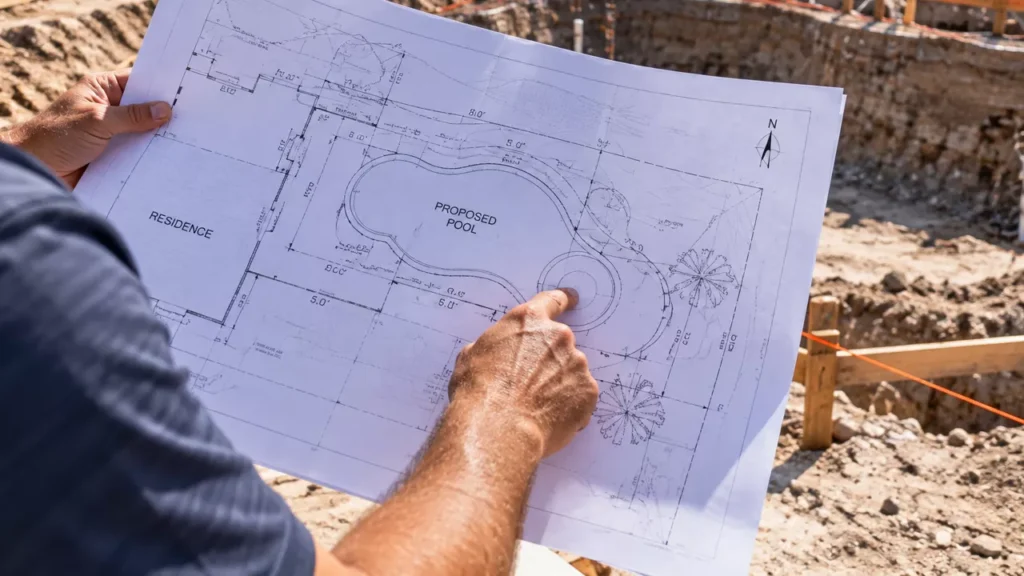
Start with the site itself: lot, soil, water table, drainage, and access. Sandy soil and a high water table call for dewatering and hydrostatic relief planning. Note where rain collects and whether a truck or crane can reach the yard.
Permitting comes next, and barrier rules vary by county. Palm Beach requires a barrier affidavit with every pool permit, while Martin County’s barrier checklist asks for a site plan showing setbacks on all sides. Port St. Lucie and Indian River County each have their own pool enclosure and gate requirements.
Then there’s the $30,000 inground pool question. Most current South Florida estimates run above that, and only a small, simple pool gets close.
Finally, rank your lifestyle and feature priorities. Do you want laps, a tanning ledge for the kids, or a spa for evenings? Each one points toward a different material.
Submitting an inquiry for a free quote lets you test this checklist against your actual lot. To show how these factors play out, here’s what concrete projects on South Florida sites tend to reveal.
What We See Building Concrete Pools on South Florida Lots
On concrete projects, four site factors usually settle the pool type before anyone picks tile: soil, water table, access, and permitting.
Sandy soil is the norm here. It digs easily but doesn’t hold a vertical cut for long, so excavation walls often need shoring or quick follow-up from the steel crew. A site-tied rebar cage can be engineered for that soil, which a factory mold can’t do.
The water table surprises many homeowners. On lots near the Intracoastal in Palm Beach or along Fort Lauderdale’s canals, groundwater can appear only a few feet down. That calls for dewatering during the dig and relief valves drawn into the plans from day one.
Access matters most in older neighborhoods, like the narrow streets around downtown Stuart or tight Hollywood lots. Concrete can travel by pump hose through a side gate, which often makes it workable where a crane can’t reach.
Permitting rarely changes the material. It changes the footprint. Setbacks, easements, and barrier plans can trim a design by several feet, so check your survey before you settle on a shape.
Finding the Right Pool Type for Your Yard
The types of inground pools come down to three materials, and each one fits a different kind of lot. Concrete bends to almost any shape or feature. Molded shells suit open yards with clear crane access. Vinyl liners keep entry costs lower but require planned liner replacements.
Your site makes the real call. Sandy soil, a high water table, side-yard access, and county setbacks will narrow the field faster than any brochure. Start with a survey, then match shape and features to how your family uses the backyard.
Want to see how that plays out on South Florida lots? Browse the Sapphire portfolio for concrete pools built from Port St. Lucie to Indian River County.
Submitting an inquiry for a free quote is a simple next step. Sapphire Pools & Spas can walk your lot and sketch a pool built for real life.
FAQ
How many types of pools are there?
There are three main inground materials: concrete/gunite, fiberglass, and vinyl liner. Sapphire Pools & Spas specializes exclusively in concrete pools, offering greater design flexibility and customization. Above-ground and semi-inground pools are two more alternatives. Shapes and styles multiply your options from there.
Can I get an inground pool for $30,000?
It depends on size, features, scope, and site conditions, so no figure is guaranteed. Most current South Florida estimates run higher. A site-specific quote and the 2026 South Florida cost guide will give you a realistic number.
How long do fiberglass pools last?
Sapphire Pools & Spas doesn’t install fiberglass pools, focusing instead on custom concrete pools for greater design flexibility and durability. But it varies by manufacturer, installation quality, water chemistry, and Florida sun. The shell and gelcoat usually carry separate warranties, and no lifespan is guaranteed.
What is a semi-inground pool?
It’s a pool set partly into the ground, with part of the wall above grade. It sits between above-ground and fully inground pools and often suits sloped yards. It isn’t counted among the main inground types.
What is the difference between a gunite pool and a concrete pool?
Gunite is concrete sprayed as a dry mix, with water added at the nozzle. Traditional concrete is poured, and both types rely on rebar. Shotcrete is the premixed wet version that’s sprayed on.
Related Articles
 10 min read
 9 min read
