

Pool deck coatings can refresh a tired concrete slab in Palm Beach, Martin, St. Lucie, and Indian River counties. The best option depends on sun exposure, budget, and how often you’re willing to recoat. Textured acrylic cool deck usually costs the least. Polyaspartic, polyurea, and epoxy systems cost more and hold up differently under Florida UV.
Picture a west-facing patio in Port St. Lucie at 3 p.m., baking in full sun before the afternoon downpour rolls in. That deck needs a surface that stays bearable under bare feet, grips when wet, and handles salt air. Sources disagree on cost and lifespan, and many of the figures come from companies that sell only one system.
This guide compares each type, walks through prep and cost factors, and flags when a coating can’t fix the slab underneath. First, the question most homeowners ask.
What Is the Best Pool Deck Coating?
For most sound concrete decks in Palm Beach, Martin, St. Lucie, and Indian River counties, textured acrylic cool deck is the usual budget pick among pool deck coating options. It’s water-based and sprayed over the existing slab, and light colors stay noticeably cooler underfoot. The tradeoff is upkeep. Its color coat fades and chalks in South Florida sun, so you’ll need to recoat more often.
Polyaspartic and polyurea systems cost more than acrylic. Aliphatic polyaspartic coatings generally offer better color stability in Florida’s strong UV exposure, while standard aromatic polyurea can yellow without a UV-resistant topcoat. Both cure quickly, but their performance depends on the formulation and proper installation.
Epoxy is hard and bonds tightly to concrete, but outdoors it tends to yellow and chalk. That’s why many installers use it as a base under a UV-stable topcoat. Liquid rubber suits homeowners who want a softer feel underfoot.
Sources disagree on how long each system lasts, and many figures come from companies that sell only one system. Whichever you pick, lasting results depend on thorough surface prep. DIY jobs that skip cleaning, crack repair, and grinding often peel early. To choose, it helps to understand how each type works.
Pool Deck Coating Types Explained
Concrete pool deck coatings fall into two broad families. When comparing concrete pool deck coating options, start by deciding whether you need a new surface layer or a nearly invisible sealer. Film-forming systems, such as acrylic, epoxy, polyurea, polyaspartic, and liquid rubber, build a new surface layer on top of the slab. Penetrating sealers soak in and leave the concrete looking much the same.
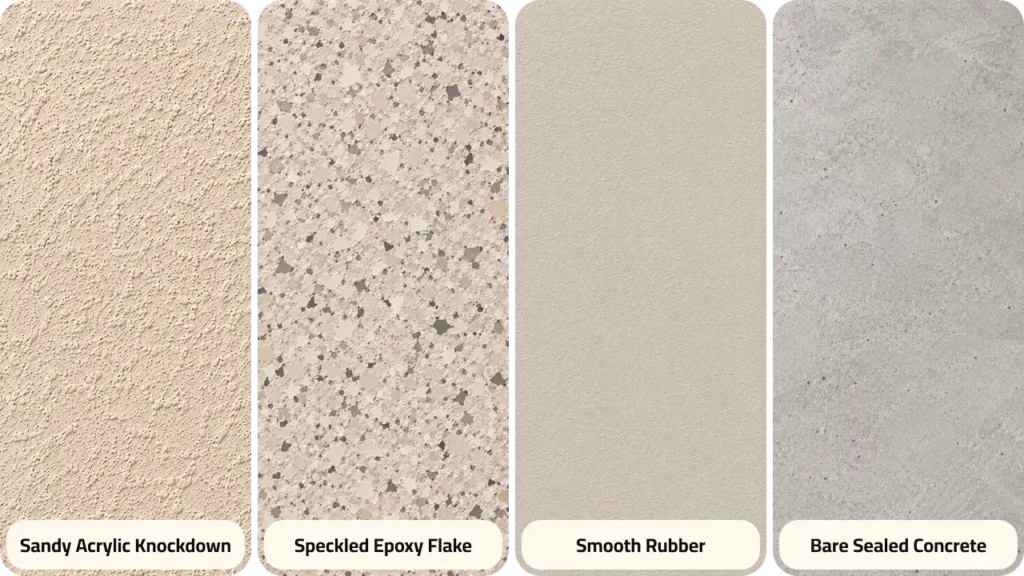
Within the film-forming group, chemistry matters more than the label on the bucket. Aromatic resins in epoxy and standard polyurea tend to yellow in steady sun. Aliphatic polyaspartic systems hold their color, so installers often apply them over an epoxy base. Some sources note the epoxy underneath can still amber over time.
Feel underfoot varies too. Acrylic cool deck has a sandy, knockdown texture. Flake systems feel harder and smoother unless you add grit, and liquid rubber gives a slightly cushioned, flexible surface.
So which one fits your deck? Ask whether the slab is sound and dry, whether it bakes in full afternoon sun like a west-facing patio in Jupiter or Port St. Lucie, and how often you’re willing to recoat. Each coating answers those three questions differently. We’ll start with the most common budget option, acrylic.
Acrylic & Cool Deck Coatings
Acrylic cool deck is the familiar budget choice. It goes on in layers: a texture coat knocked down over the slab, then a color coat and sealer. It’s water-based, and reflective light colors stay cooler underfoot.
Among pool deck texture coatings, acrylic usually costs the least. For buyers comparing coatings for pool decks, its knockdown finish offers traction without a premium resin system. It also lasts longer than plain pool deck paint, which wears faster and can become slick. The catch is the sun. In high-UV spots, the color and sealer chalk and fade, so plan on refreshing them more often than other finishes. Epoxy takes a harder, more rigid approach.
Epoxy Pool Deck Coatings
Epoxy cures into a hard, rigid shell that bonds tightly to concrete and shrugs off pool chemicals and foot traffic. That strength has limits outdoors. A smooth epoxy finish can get slick when wet, and aromatic resins tend to yellow or chalk under steady South Florida sun.
That’s why epoxy pool deck coatings are often built as a system: epoxy with aggregate broadcast into it for grip, then a UV-stable topcoat to protect the color. The slab can also crack as it expands and contracts with temperature swings.
Polyurea and polyaspartic systems address epoxy’s weakness to UV.
Polyurea & Polyaspartic Coatings
Polyaspartic (aliphatic) systems sit at the high-performance end. A polyaspartic pool deck coating cures fast and, thanks to its aliphatic chemistry, holds color under steady South Florida sun. Flakes and grit add wet traction.
Standard aromatic polyurea is tough but can yellow outdoors, so it usually works as a base coat. The catch is price and workmanship. Polyurea pool deck coatings cost more than acrylic, and their fast cure leaves installers little room for error. Poor grinding or rushed timing tends to show up as peeling.
Rubberized & Liquid Rubber Coatings
A liquid rubber membrane sprays or rolls on as one seamless, flexible layer. It moves with the slab, bridges hairline cracks, and sheds water. If you want a softer feel around the pool, it’s a good option. Textured finishes put it among pool deck non-slip coatings that grip when kids run wet from the steps.
Full sun brings trade-offs. A dark rubberized pool deck coating can get hot underfoot, and long-term adhesion depends on prep and exposure. Sources disagree on lifespan, and most claims come from sellers. At the low end are sealers and paint.
Penetrating Sealers And Paint
Penetrating sealers (silane-siloxane, siliconate) soak into the concrete and react below the surface instead of forming a film. The deck keeps its natural look and texture and sheds water from afternoon downpours. With no top layer, there’s nothing to peel. They won’t add color or hide stains, though.
Acrylic deck paint costs the least upfront. If you’re looking for the best pool deck paint for concrete, prioritize a product rated for outdoor pool surrounds and plan for added traction. It also wears fastest under UV and foot traffic, and a smooth painted surface can become slick when wet unless you add grit. Most coatings resist water. None fixes a cracked, settled, or failing slab. Here’s how they stack up side by side.
Pool Deck Coating Comparison Table
South Florida resurfacing runs about $5 to $14 per sq ft installed, according to a 2026 local guide. Paint and sealers cost less. Lifespan claims often come from single-system sellers, so the table sticks to relative terms.
| Attribute | Acrylic/cool deck | Epoxy | Polyurea/polyaspartic | Rubber | Penetrating sealer | Paint |
|---|---|---|---|---|---|---|
| Installed cost | Low | Moderate | Moderate to high | High | Low | Lowest |
| Typical lifespan | Shorter | Mid-range | Longest claimed | Mid-range | Long below surface | Shortest |
| Heat underfoot | Cool if light | Varies by color | Dark flakes run hot | Can run hot | Like bare concrete | Color dependent |
| Wet grip | Good when textured | Slick without grit | Good with grit | Good when textured | Unchanged | Slick if smooth |
| UV and salt air | Fades and chalks | Yellows without topcoat | Holds color | Claims vary | No film to fade | Wears fast |
| Maintenance | Frequent recoats | UV topcoat needed | Occasional cleaning | Periodic touch-ups | Periodic reapplication | Frequent repainting |
Your pool deck coating cost depends on the slab condition, deck size, and the cost of removing the old coating. For affordable pool deck coatings Florida homeowners can consider, acrylic is a practical starting point, though intense UV means less expensive finishes may need attention sooner. Slab too far gone? Request a free quote on a paver deck to compare against coating bids.
What Works Best in Florida Heat And Salt Air
South Florida asks a lot of a deck. Pool deck coatings here face strong UV, afternoon downpours, humidity, and salt air off the Atlantic. The finishes that hold up share a few traits.
Start with color. Light shades like white, sand, and light gray reflect more sunlight, while dark coatings and dark flake blends absorb it and get hot under bare feet. Even light finishes feel warm by mid-afternoon, so take sellers’ cooling claims with a grain of salt.
Next, non-slip texture. Splash-out, sunscreen, and a sudden summer storm make smooth surfaces slick. A knockdown texture or broadcast grit gives wet feet something to grab.
Third, look for a UV-stable topcoat. Aliphatic polyaspartic topcoats hold their color, while most pool deck epoxy coatings Florida contractors install need one to avoid yellowing. Dense, non-porous films also resist mildew and salt residue, though installers make most of those claims.
On a tighter budget? An affordable acrylic with an anti-slip additive is a reasonable way to refresh a sound deck in Stuart or Vero Beach. Expect to recoat it more often near the coast.
Whatever you choose, prep determines how it holds up.
Prep Work And Cost Factors
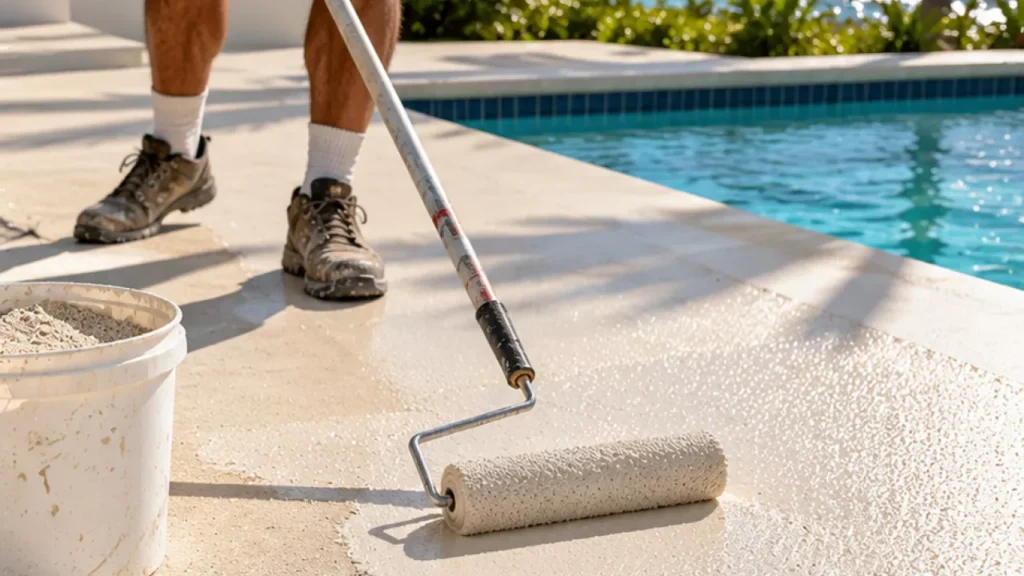
Most coating failures start before the first coat goes on. Good prep follows four steps: clean, repair, profile, and dry. The crew degreases and pressure washes away sunscreen, oils, and mildew, then fills cracks with materials that flex with the slab and lets them cure.
Profiling comes next. Diamond grinding opens the concrete so the coating can grip. Acid etching alone won’t replace grinding off a failing coating. Last, the slab has to dry completely, which takes patience during afternoon storm season.
Moisture vapor testing is the step homeowners rarely hear about. A calcium chloride kit or an in-slab humidity probe shows whether moisture is pushing up from below. Skip it, and epoxy or polyurea can blister and peel.
Your pool deck coating cost follows that same work:
project cost = deck sq ft × system rate + crack repair + old coating removal
Condition matters most. Small decks usually cost more per square foot, multi-layer systems cost more than a single coat, and grinding off old layers adds labor.
Sapphire Pools & Spas doesn’t apply pool deck coatings. Search “pool deck coatings near me” and compare written quotes from several licensed coating contractors, making sure each bid spells out prep and moisture testing. If the slab looks beyond saving, consider requesting a free quote for a paver deck. Some problems, though, are beyond what any coating can handle.
Signs a Coating Will Not Fix Your Deck
A coating is a skin, not a structural repair. If the slab underneath is moving, wet, or coming apart, pool deck coatings only hide the problem for a season or two.
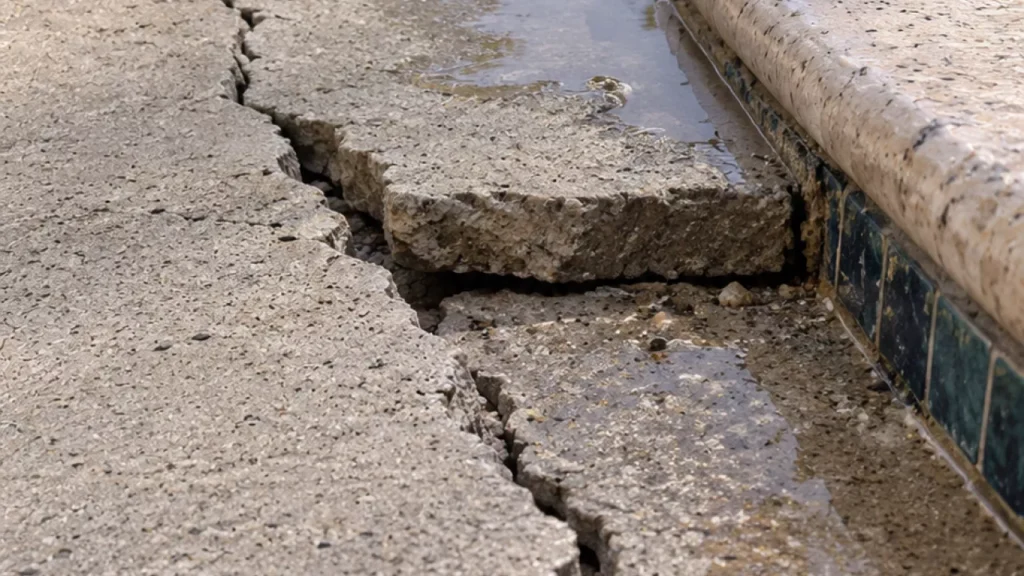
Structural or widening cracks and settlement come first. Watch for one side of a crack sitting higher than the other, cracks that grow each summer, or a section that has sunk toward the pool. Those need a separate slab repair or leveling first.Poor drainage and moisture vapor are the quieter culprits. When afternoon downpours pond against the deck, moisture keeps pushing up through the slab. Non-breathable films like epoxy and polyurea trap that vapor until it blisters and lifts them.
Delamination over old layers is the third red flag. Tap the deck with a broom handle. Hollow sounds, bubbles, or stacked overlays and patches mean you have to grind off the old material first.
When you search “pool deck coatings near me,” ask each contractor how they check for these issues. Deeper slab problems can be handled through pool renovation services as part of a larger project. If the slab is sound but you’d rather skip the recoating cycle, pavers are one alternative.
Coating vs Pavers Over Concrete
Pool deck coatings win on upfront price. The catch is the calendar. Acrylic needs fresh color and sealer every few years, and premium systems eventually need recoating too. Pavers flip that math: more cost on day one, far fewer recoating cycles after.
Travertine pavers over sound concrete are the common route from Boca Raton to Vero Beach. If the slab is stable, the stone can often go right over it without a tear-out. Light travertine stays cooler under bare feet, its natural texture grips when wet, and you can replace a cracked paver yourself. That’s the heart of paver pool deck installation.
Porcelain pavers are the alternative. They’re dense, need little sealing, and suit a clean, modern look. Expect a higher price than travertine and a warmer feel in full afternoon sun. Both are why paver pool decks stay common here.
A paver project is also a natural time to update edges. Pick from pool coping ideas that match the stone. For shade, browse these pool pergola ideas.
If upfront cost is the hurdle, pool project financing options can spread it out. If you already have natural stone, it needs a different kind of sealing.
Sealing Travertine And Paver Decks
Travertine and other natural stone pavers don’t get coated like concrete. They get sealed, and the product matters. Film-forming pool deck coatings build a layer on top, but stone needs to breathe so moisture can escape.
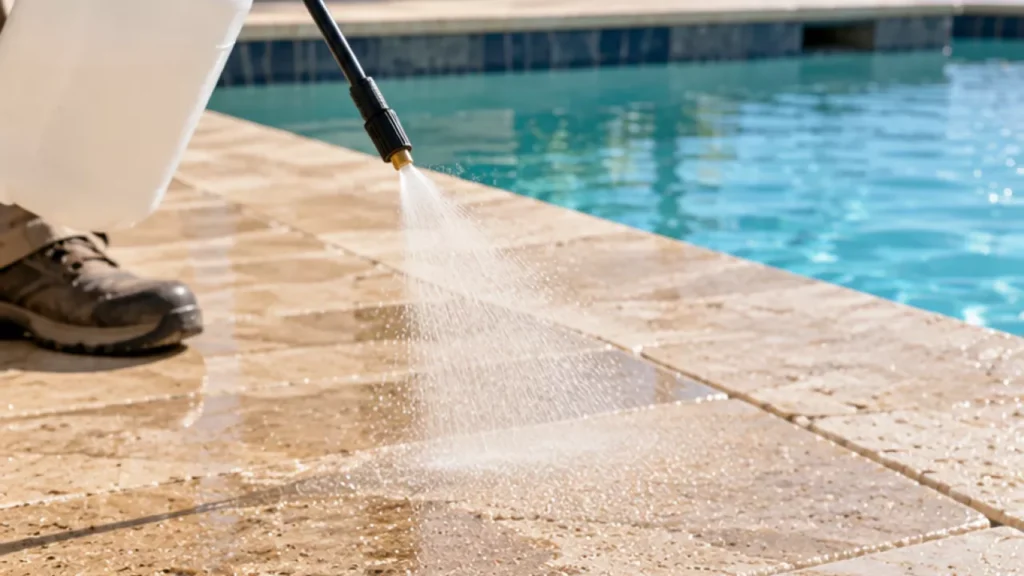
The right choice is a breathable penetrating sealer made for pool environments. It soaks into the stone’s pores and helps resist chlorine, salt, and sunscreen stains without changing the natural matte look. Glossy topical or wet-look sealers work differently. They can trap moisture in humid weather, peel or yellow under UV, and turn slick when wet.
Resealing is routine maintenance, not a rebuild. Stone suppliers commonly suggest a fresh coat every two to three years, sooner for a deck that bakes in full sun in Jupiter or catches salt spray in Vero Beach. A water drop test tells you when. If water beads, you’re fine. If it darkens the stone and soaks in, it’s time to reseal.
Clean the deck, let it dry fully, then apply two thin coats. You can apply a new penetrating coat over the old one, but you must strip the topical film first.
What We See on South Florida Pool Decks When Coatings Fail
Across Sapphire Pools & Spas renovation projects in Palm Beach, Martin, St. Lucie, and Indian River counties, the same coating failure patterns keep turning up. Most aren’t about one bad product. Intense UV, heavy rain, and salt air wear on a surface year after year.
Older cool-deck and acrylic surfaces fade first. The color chalks, the texture wears smooth along walking paths, and sunscreen stains settle in. Peeling follows, usually near the coping or wherever water sits after a storm.
Painted or coated concrete draws two everyday complaints. It gets hot under bare feet by early afternoon, and it turns slick when kids climb out dripping.
The toughest cases are coatings laid over cracked, settled, or poorly draining slabs. The new layer looks fine for a while, then old cracks reappear, and the film lifts. No recoat solves that.
That’s usually when owners stop cycling through pool deck coatings. Some repair the slab and recoat with better prep. Others switch to light travertine or porcelain pavers over sound concrete, where you can replace a damaged piece on its own. Either path starts with the slab.
Choosing the Right Surface for Your Deck
Choosing among pool deck coatings starts with an honest look at the slab. The best pool deck coatings for concrete are only as reliable as the slab underneath. On sound, dry concrete, textured acrylic cool deck keeps costs down. Polyaspartic or epoxy with a UV-stable topcoat buys more time between recoats. Light colors and real grit matter more than any brochure claim.
Prep decides the outcome. Skip crack repair, grinding, or moisture testing, and even a premium system peels.
If the slab is cracked or settled, or you’re tired of recoat cycles, travertine or porcelain pavers offer a longer-term path built for real life. You can see finished decks from Boca Raton to Vero Beach in the Sapphire project portfolio.
Want to compare a paver deck against your coating bids? Submitting an inquiry for a free quote is a simple first step toward a deck made to last through summer after summer.
FAQ
What is the best coating for a pool deck?
Textured acrylic cool deck is the usual budget pick for sound concrete. For longer service, polyaspartic, polyurea, or epoxy with a UV-stable topcoat holds up better in Florida sun. Liquid rubber suits homeowners who want a softer feel underfoot.
How much does a pool deck coating cost?
In South Florida, professional pool deck resurfacing typically costs about $5 to $14 per square foot installed. Your pool deck coating cost depends on the system, deck size, surface preparation, and installer. Premium coatings, crack repairs, and removing old finishes can increase the final quote.
Is liquid rubber deck coating any good?
It forms a flexible, slip-resistant membrane that can seal hairline cracks. The trade-offs are heat underfoot and long-term adhesion in full sun, so plan on recoating periodically.
Can I do pool deck coatings myself?
Yes, DIY kits exist, mostly acrylic and rubber. Prep determines the result, so don’t rush cleaning, crack repair, or drying. Polyaspartic and polyurea cure fast and are hard to apply well without professional equipment.
How long does a pool deck coating last in Florida?
Acrylic is often cited at 3 to 5 years, and harder systems are claimed to last longer. Real lifespan depends on UV exposure, prep, and installer skill, so treat any number as an estimate, not a guarantee.
Can you coat a cracked concrete pool deck?
You can repair and coat hairline cracks. Structural, widening, or moving cracks need assessment and slab repair first, or they’ll show through the new coating within a season or two.
Related Articles
 1 min read
